
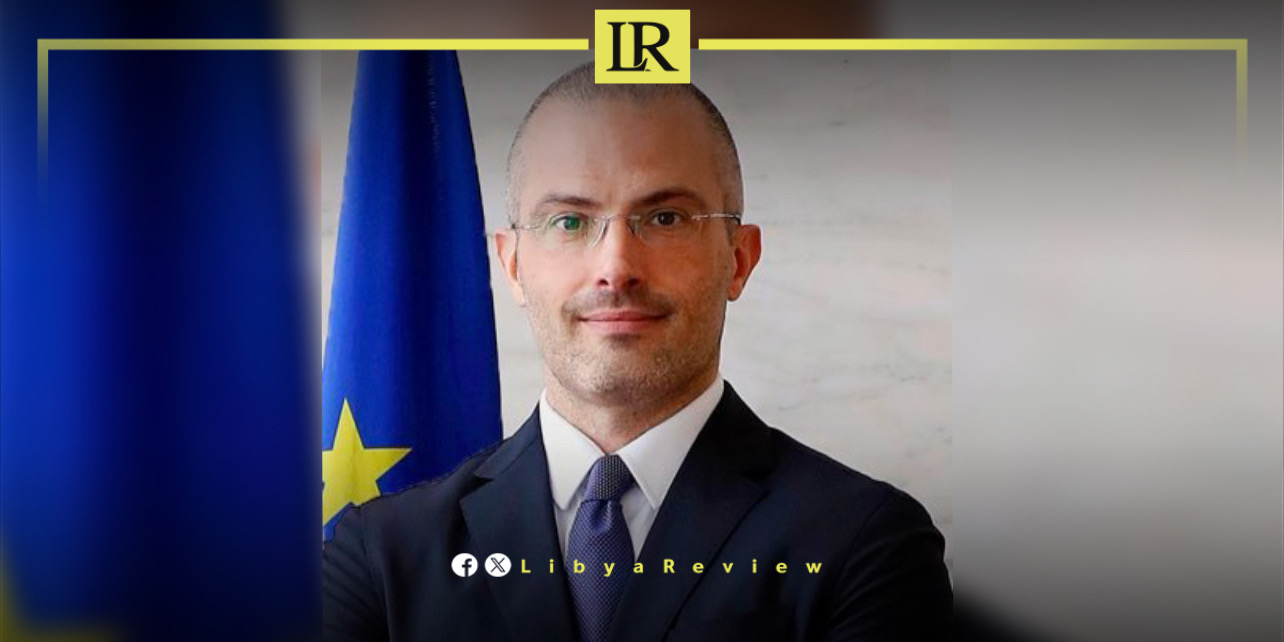
The European Union has renewed its support for efforts to unify Libya’s national budget and ensure sustainable public spending, saying both steps are essential for protecting financial stability and supporting Libyan families and businesses.
The remarks came during a meeting in Tripoli between the EU Ambassador to Libya, Nicola Orlando, and the Minister of Finance in the Government of National Unity, Rachid Abou Ghafla. The meeting was also attended by the EU Head of Cooperation, Marton Benedek.
Orlando said the EU stressed the need to continue building on these efforts in cooperation with Libya’s oversight institutions. He said stronger accountability and transparency in the management of public resources remain vital for improving confidence in state finances.
The EU also underlined the importance of preserving the central role of the National Oil Corporation and strengthening its independence. The corporation remains one of Libya’s most important economic institutions, as oil revenues continue to form the backbone of the country’s public finances.
Orlando said the European Union would continue supporting Libya as it deals with economic challenges and works to advance urgent reforms. He added that this support would also continue through the “Investment for Libya” programme, which aims to back economic recovery and development.
Libya has faced years of financial fragmentation due to political division and rival administrations. Calls for a unified budget have increased as local and international actors push for a more transparent spending framework that can reduce waste, improve public services, and support long-term economic stability.
The issue is closely linked to the management of oil revenues, public salaries, subsidies, and development spending. International partners have repeatedly urged Libyan institutions to strengthen financial oversight and ensure that public funds are used fairly across the country.
The EU’s renewed position reflects wider international concern over Libya’s economic governance at a time when the country continues to seek a political settlement, institutional reunification, and more stable public financial management.

