
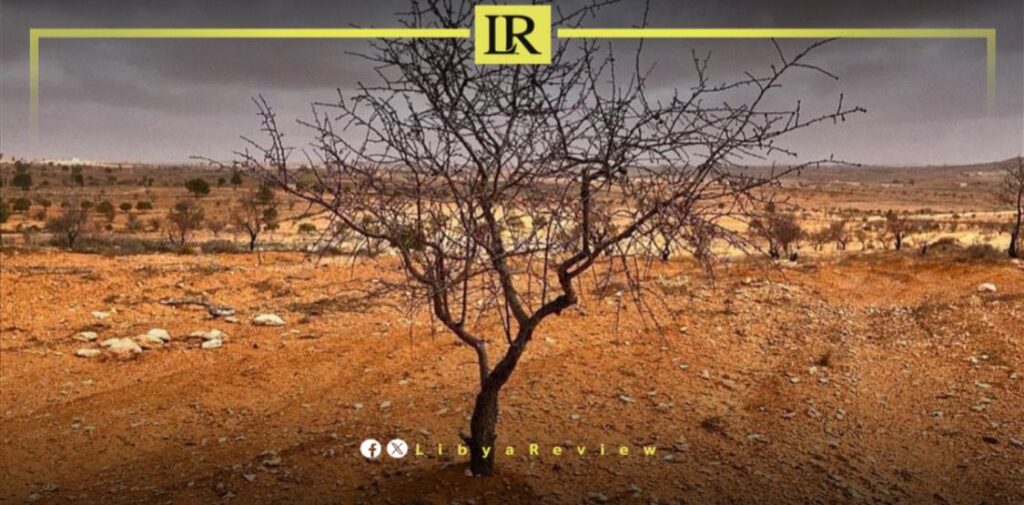
A new report by the International Organization for Migration (IOM) has highlighted how climate change is intensifying food insecurity and driving migration across Libya. The study, titled “Libya – Climate Change, Food Security & Migration”, shows how rising temperatures, prolonged droughts, and desertification are eroding farmland and limiting food production.
The findings reveal that environmental shocks are forcing vulnerable rural households to abandon agriculture and seek alternative livelihoods. Among migrants engaged in farming and related sectors, 19% reported production losses or livestock deaths due to extreme weather. Many of these migrants originated from neighbouring countries such as Sudan and Niger, where climate pressures are also severe.
The report notes that 9% of agricultural workers have already shifted into other industries because of worsening land degradation. At the same time, half of those still in farming stated they were forced to increase fertiliser or input use to maintain productivity, leading to higher costs and heavier workloads.
Food security is also deteriorating for migrants inside Libya. The IOM found that 42% of adults and 20% of children did not eat three meals a day, while 28% reported limited dietary diversity. Many resorted to coping mechanisms such as eating cheaper food, reducing meal frequency, or borrowing food and money.
The impact of climate change extends beyond agriculture. Nearly 38% of surveyed migrants said climate change threatened their job security, particularly those reliant on farming. Furthermore, 26% revealed that climate conditions had directly influenced the timing of their migration.
The report concludes that without urgent action, climate-driven food insecurity will continue to push vulnerable families to migrate, both within Libya and towards Europe, with Italy identified as the top European destination.

