
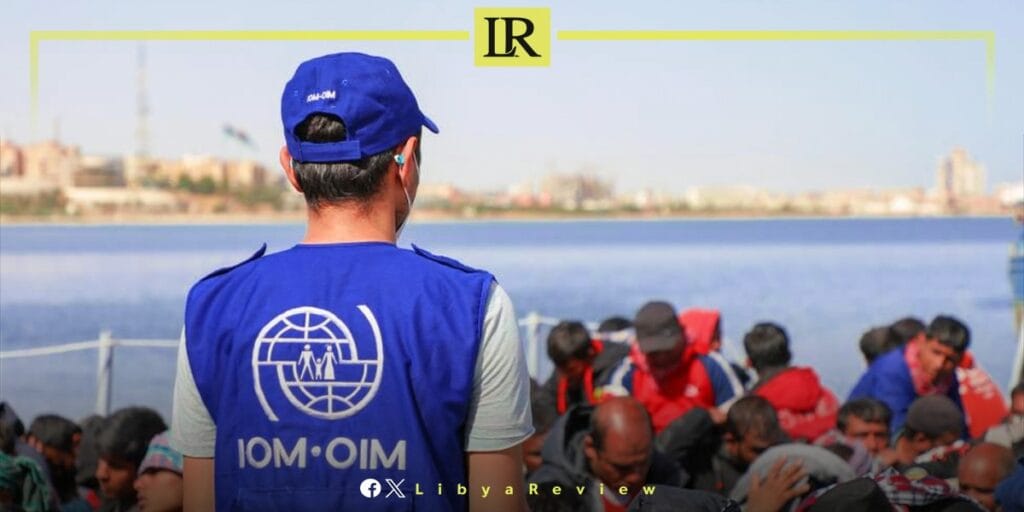
The International Organization for Migration (IOM) has confirmed that 564 migrants were intercepted at sea and returned to Libya between 7 and 13 December 2025.
The figures were published as part of the IOM’s weekly maritime update and highlight the persistence of migration attempts despite seasonal weather conditions and ongoing interception efforts.
According to the IOM, interceptions during the reporting period occurred at multiple points along Libya’s western coastline, including areas near Tripoli, Zawiya, Alkhums, and Misrata.
Those returned to Libya included men, women, and children, reflecting the diverse and highly vulnerable profile of migrants attempting the dangerous sea crossing toward Europe. The organization reiterated that it does not participate in interception or rescue operations and has no oversight over events that take place before or after migrants are disembarked.
The latest data brings the total number of migrants intercepted and returned to Libya since the beginning of 2025 to 26,328. Of these, 22,853 were men, 2,313 women, and 954 children, while the gender of 208 individuals could not be determined.
The figures represent a continued upward trend compared to previous years, with 21,762 migrants returned throughout 2024 and 17,190 in 2023.
The humanitarian cost of the Central Mediterranean route remains severe. From 1 January to 13 December 2025, at least 1,190 migrants were reported dead or missing while attempting the crossing, according to IOM estimates.
These figures include migrants departing from Libya and other Mediterranean departure points, reinforcing the route’s status as one of the deadliest migration corridors globally.
IOM continues to stress that Libya cannot be considered a safe port for migrants, citing ongoing insecurity, arbitrary detention, limited access to protection, and widespread reports of abuse.
Humanitarian organizations have repeatedly urged stronger international cooperation, expanded legal migration pathways, and increased support for voluntary return and reintegration programs.

