
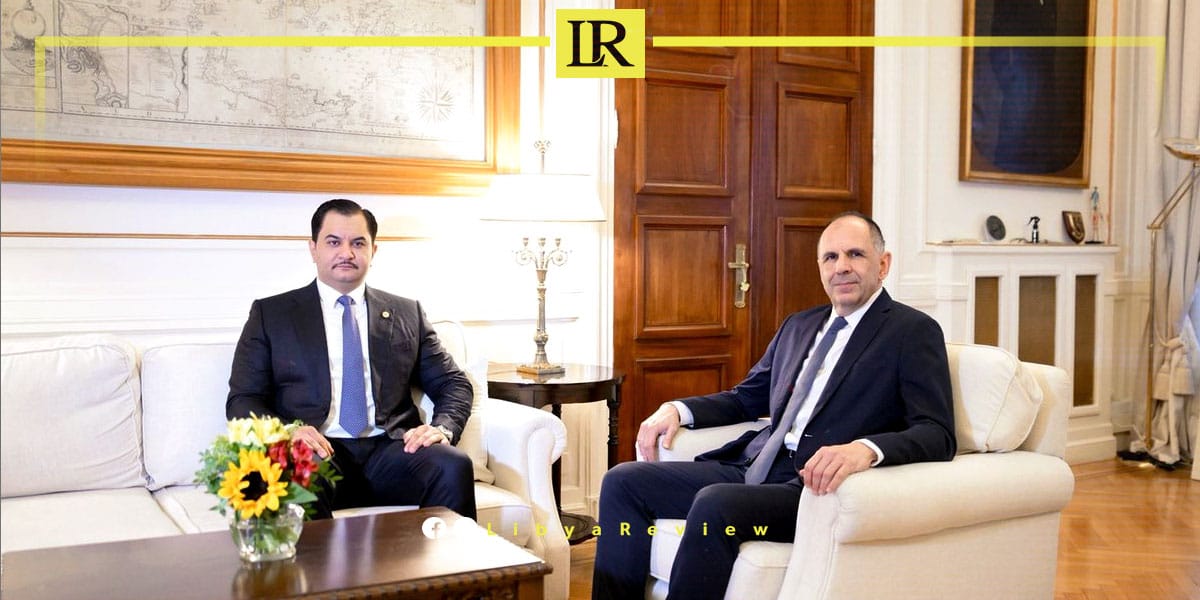
Libya and Greece have renewed efforts to reach an agreement on maritime boundaries and economic cooperation following talks between Greek officials and Saddam Haftar, Deputy Commander-in-Chief of the Libyan National Army (LNA).
Greek Foreign Minister George Gerapetritis said Greece remains committed to concluding an agreement with Libya on the delimitation of the exclusive economic zone (EEZ) between the two neighbouring countries, which share opposite coastlines across the Mediterranean.
Speaking after Haftar’s visit to Athens, Gerapetritis described discussions held between Libyan and Greek representatives on 10 June as constructive. He said the next round of talks would take place in the Greek capital as both sides seek to advance negotiations on issues of mutual interest.
According to the minister, discussions covered opportunities for economic cooperation and investment, particularly in the energy and construction sectors. The two sides also explored the possibility of launching a direct air link between Benghazi and Athens, reflecting a shared interest in expanding cooperation in the transport sector.
Migration was another key topic during the talks. Gerapetritis said Libya and Greece agreed to work together to reduce irregular migration flows towards the Greek islands of Crete and Gavdos. He added that Saddam Haftar stressed the importance of continuing programmes for training Libyan coast guard officers in Greece.
The renewed engagement comes amid ongoing disputes in the Eastern Mediterranean over maritime jurisdiction and offshore energy resources. Greece and Libya have maintained dialogue despite differences over maritime boundaries and competing claims in the region.
Gerapetritis also reiterated Greece’s support for a political settlement in Libya, emphasising that any solution should be led by Libyans themselves and free from external interference.
The discussions underline growing efforts by both countries to strengthen political, economic and security cooperation while addressing shared challenges ranging from migration management to energy development in the Mediterranean.

