
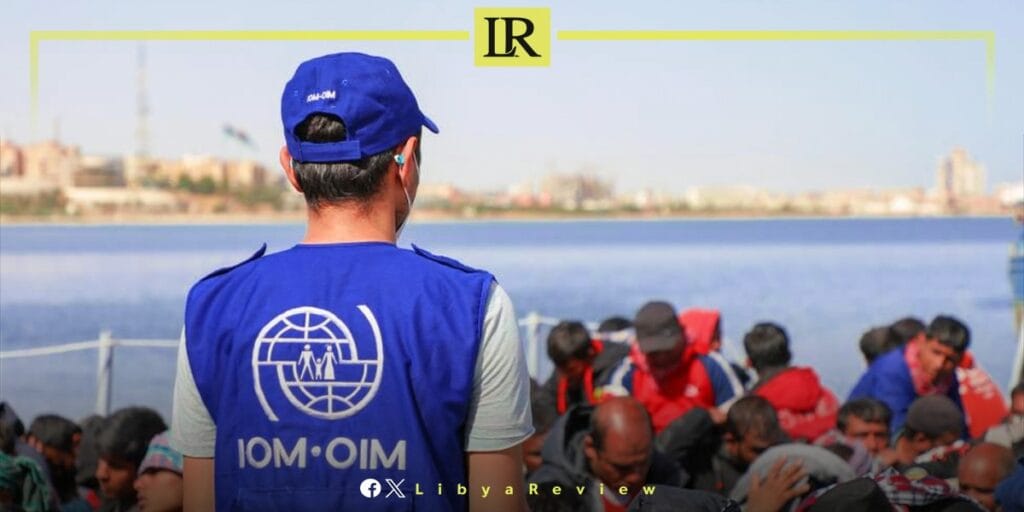
The International Organization for Migration (IOM) has reported that as of July 2025, Libya is hosting approximately 894,890 migrants, reflecting an 18% increase compared to the same period last year. The data was released through IOM’s Displacement Tracking Matrix (DTM) and covers 100 municipalities across the country.
Migrants in Libya now represent 45 nationalities, with the majority arriving in search of better economic opportunities. According to the IOM, 77% of migrants cited economic hardship and lack of employment in their home countries as the main reasons for migration, while 16% were fleeing conflict or persecution.
The western region of Libya hosts the largest share of migrants (53%), followed by the east (35%) and the south (12%). Major urban centers like Tripoli (14%), Benghazi (11%), and Misrata (10%) continue to be key hubs.
Sudanese nationals make up the largest migrant group, accounting for 35% of the total, or approximately 311,869 individuals, driven largely by the ongoing conflict in Sudan. Other major nationalities include Nigeriens (21%), Egyptians (19%), Chadians (9%), and Nigerians (3%).
Employment remains largely informal. Although 76% of migrants reported being employed—mostly in construction, agriculture, and domestic work—the vast majority (80%) rely on verbal agreements. Only 2% have formal employment contracts, reflecting the widespread lack of labor protections.
Migration routes into Libya are dominated by irregular crossings: 42% of migrants entered via Niger, 19% via Sudan, 19% through Egypt, and 13% from Chad. Just 8% reported using legal and organized travel methods.
Looking ahead, 36% of migrants now intend to continue their journey to Europe, while 41% remain uncertain, and 15% express a desire to return to their home countries.

